Leadership & People
Khalid's Kabsah and Professor Mischel
First published in LinkedIn on June 20, 2014. Read it on the original site.
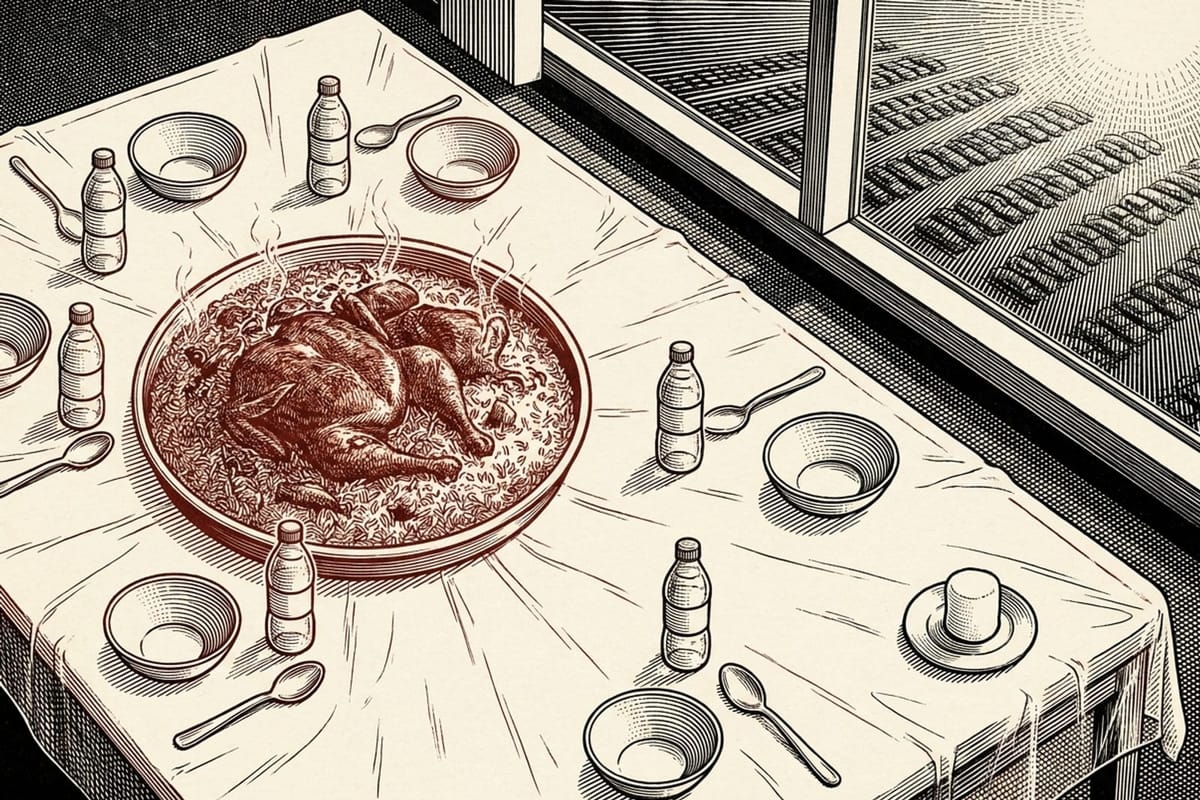
This is a picture of Kabsah, a traditional Saudi dish, but who’s Khalid?!
Khalid is a young man who can be described, in the words of Charles Dickens, as “Hard and sharp as flint, from which no steel had ever struck out generous fire”. His sharp eyes and deep voice make you feel you are dealing with an undercover cop, not talking to your workmate from Media Relations.
Well, since you have read this far, let me introduce some of the associates in the story:
Khalid#2 (another Khalid): in a different time in a different universe, you may see this man’s picture among the internationally most wanted.
Fadi: the only guy I know who carries a medical report stating a “Virus Free” brain.
Abdullah: so energetic so young that you cannot resist remembering the pink rabbit in Duracell batteries TV commercials. And I am still convinced that Abdullah was kidnapped and brain washed by Apple.
The story goes like this: it was lunch time and Khalid volunteered to feed us with an original Bukhari Kabsah (original Bukhari means that the restaurant cooks and owners must be originally from Uzbekistan and the restaurant itself must be incredibly old, half abandoned, and going through a never-ending construction works). Khalid went, bought us the Bukhari, came back, and the reception was royal at the gates of the company (the reception for the kabsah not Khalid).
Like all the companies in Riyadh, we have so much space in the Parking Lot, but we choose to be healthy and look for a parking that is 1-2 kilometer away from the building to enjoy walking under the loving 55 Degrees Celsius sun of Riyadh, and so did Khalid after he dropped the lunch at the gate.
Lunch was taken up to the 8 floor, and we laid down the Kabsah waiting for Khalid to arrive before we start, after all he was the one who was kind enough to go through all the trouble to feed us, right? . WRONG, It was easy at first, but after a while the hunger started rising and dancing like a Cobra of and Indian wizard. We started reminding each other that we are real men and “one for all and all for one”. However, Khalid still did not show up, and the Cobra became a tiger, so we started questioning how guilty is Khalid for being this late and if we should start eating without him as a sort of punishment for his laziness to come fast. Khalid still did not show up, and the tiger became an elephant, so we collectively reached a conclusion that Salads are not part of the actual meal, they are just additions, so it must be OK to eat them before Khalid arrives. Eventually we started wondering if the rice was a core element of the Kabsah and weather it is ethical to start eating salad and rice only, but luckily for Khalid he showed up and nine hungry stomachs started getting filled.
This situation reminded me of a series of studies that were conducted in the early seventies by Stanford University Psychology Dept. and were led by Professor Walter Mischel. The studies focused on delayed gratification, but they are more known as “The Marshmallow Test” because it included presenting 4 years old kids with one piece of marshmallow and asking the kid to wait until the interviewer provide him/her with a second marshmallow before he/she eats the first marshmallow, otherwise the kid will have only the first marshmallow.
Kids reactions in this test are ADORABLE, you can watch a video taping of the experiment in my blog: www.7a66ab.net . The studies monitored the experiment subjects (the kids) for the following 18 years, and guess what?
The kids who showed self-discipline and waited for the second marshmallow to arrive before they eat the first one, those kids earned better grades, made more social connections and were happier in general than those kids who lacked the self-discipline and could not wait for the second marshmallow
The reason I’m writing all of this is to dismiss the media-made illusion of “listen to your heart” and “connect with your feelings” or “trust your guts”….no no no…emotions and feelings are not and should never be a guide to what you should do in your life. Yes, it may feel great to have a spontaneous carefree life, but it will definitely feel greater when you actualize your dreams and ambitions through a self-disciplined life (which would be a scientifically proven happier life by the way).