Leadership & People
From Rescue to Ruin
First published in LinkedIn on January 9, 2019. Read it on the original site.
Oh man they are really angry!!
This was the first impression I got when I came across the photos of Carlos Ghosn, former Nissan Motor Co. Chairman, that were published under the headline of his arrest on tax fraud case. What was stunning at that moment was the fact that the same Japanese press had once made a hero out of the man in a 150-page graphic novel.
News rooms around the globe kicked a race of analyses about what went wrong and how it could have been evaded and with what procedures. It seemed endless. I however could not help pondering how could a business celebrity, one of the most recognized business figure of the auto industry after Henry Ford, Mr. Profit, Mr. Fixit, the man who rescued Nissan from bankruptcy and ran more than 14 other corporates, how could such a man end up a suspect in a fraud crime?
I would like to propose a three-phase cycle through which a given CEO- with a tendency to reverse course of progress, goes from start to end. How long does each phase last depends on different factors of personality, era, location, and organization. I argue that these phases can be named after well-known characters in history, namely King Arthur of Britain, Qarun (Korah) of the people of Moses, and Adolf Hitler.
The Phase of King Arthur
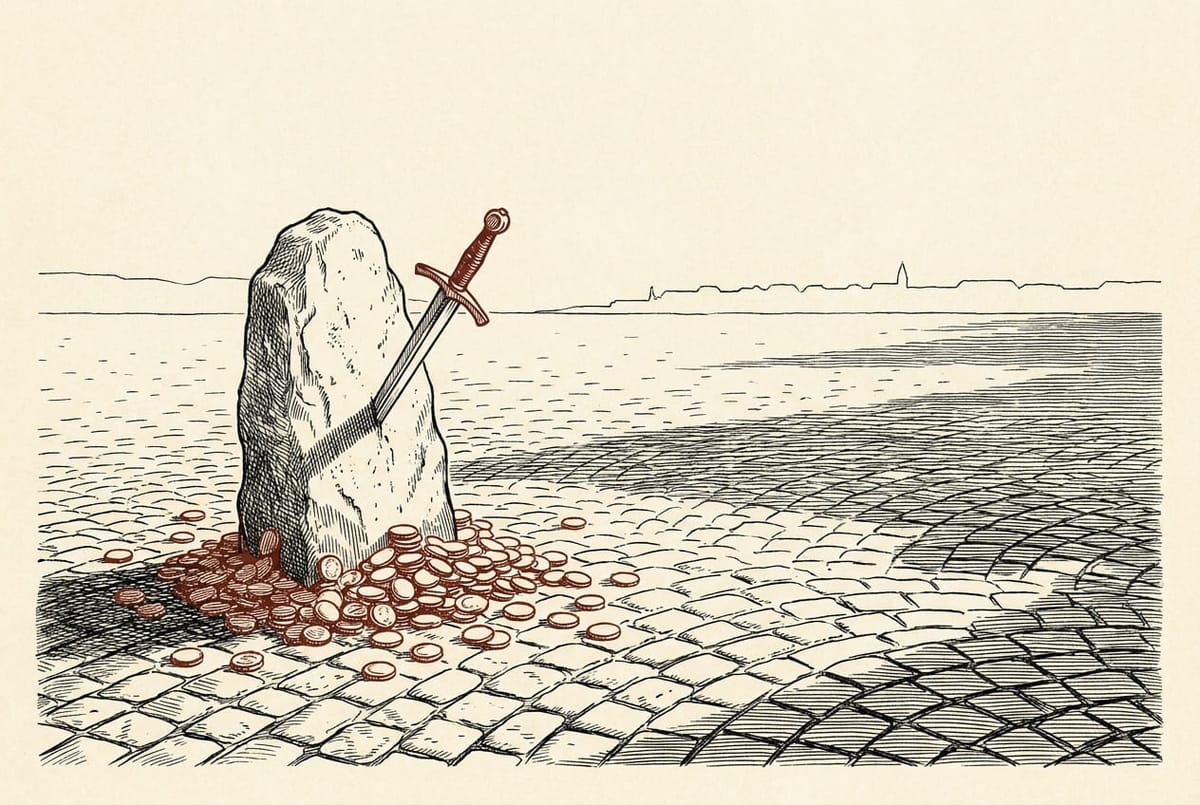
As a version of the legend goes, Arthur, whose father was overthrown by his brother and who had to be brought up the hard way in the poor alleys of the city, was the only one who managed to take the legendary sword from the stone. Arthur was aware, according to the legend, that Merlin, the magician, has cast a spell on the sword and that the spell is to be disenchanted solely by the rightful sovereignty of the country. In quite a spectacle of bravery, the young Arthur confidently stepped to prove he was the legitimate successor to the throne. Some other legends leak the tips that Merlin plotted the whole matter. The spell was meant to be unraveled solely by Arthur. Arthur was the chosen one while the others were deluded by the motto of equal opportunity for all. Even if these tips are just rumors, it is evident that Arthur who had what it needed to rule, was in the right place at the right time. Legends reveal Arthur’s dedication to the welfare of his country and his people. His round table fellowship was a manifestation of sincere efforts to advocate peace and justice.
At the Arthurian phase, the CEO is whole heartedly involved in the details of the business he runs. He is more of a listener than a speaker. He is closely attached to reality and well aware of the status of business. He tours the company branches, keenly communicates with front-line staff and customers, and he carefully selects the most skilled and efficient to help him meet the set objectives. Businesses thrive operationally and financially when their CEOs are at this phase.
The Phase of Qarun
This phase marks the beginning of deviation. “We had given him of the treasures so much that its keys would have been a burden to a company of men endowed with strength.” (Quran, Surah Al-Qasas, Verse 76). Qarun, first a believer who was seduced by wealth and pride to end up swallowed by earth bragged about his wealth: “I have been given this (wealth) only because of a knowledge that is in me.” (Verse 78). Similarly, at this phase a CEO with a tendency to deviate digests the notion that being in this position is a divine scheme triggered due to his unique qualifications and extraordinary efforts, and not just the proper integration of time, place, opportunity and skills. All genuine factors of success such as the customers, the product, the opportunities, the market conditions, supply and demand, Porter’s five forces, all are cast aside and only the genius ego centers the stage.
At the phase of Qarun, a CEO’s office is his favorite site. He becomes a fan of camera flashes and news headlines where his name is written in bold. He is more of a speaker than a listener and when he listens, he only gives his ears to good news whose carriers are his close company. The business might still look good in Accounting books, but things start to deteriorate at the level of actual performance.
The Phase of Hitler
Whenever WWII is mentioned, the direction of the debate usually tracks battles and negotiations. My primer concern however revolves around the question how could the leadership of Germany at that juncture of history, a country already worn up by war and economic sanctions, fanaticizes the possibility to invade Europe? A possible answer is that it was only an illusion instilled in the mind of the German Chancellor Hitler. All facts at that moment in terms of armory, economy, technology, and even geography suggest the impossibility of victory. However, a mind possessed by a false belief of superiority and unlimited power is blinded to act according to good judgment and reason. Hitler lent his advisors deaf ears, sacrificed his army, and lead his country to a humiliating defeat. He ended up taking his own life. A CEO who takes his illusion to the end, gets a camera flash in cuffs.
Stages, scenes, and names differ but epics of success are written by companies with the attitude of an orchestra, the most talented members know they are part of the whole. In companies where the most talented fantasize they can play solos all the time, tragedies take over.